Whole-House Humidifiers in Reno, NV
Heated Reno air can drop below desert-outdoor humidity. How whole-house humidifiers work, how the types differ and what upkeep involves.
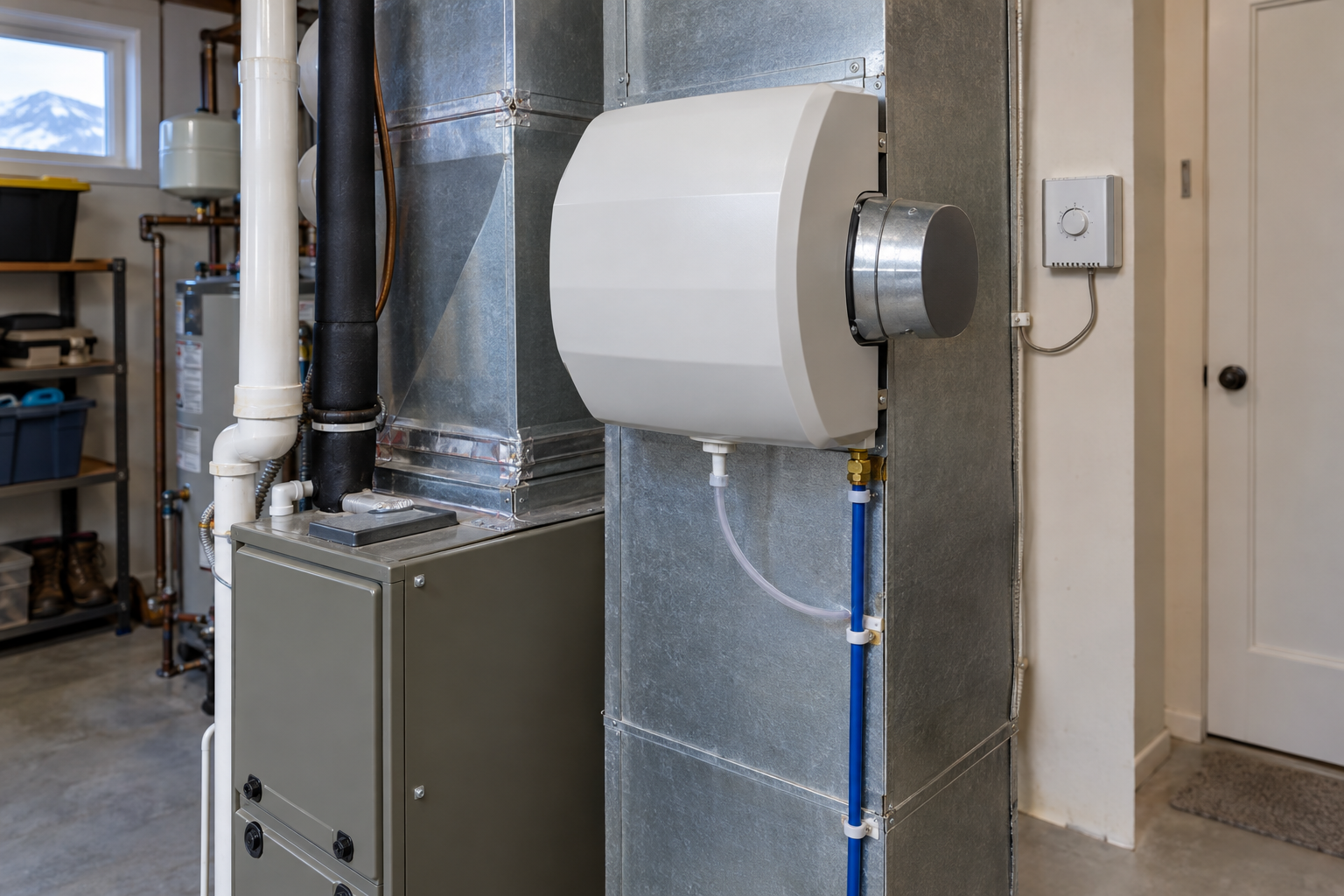
Illustrative image. Not a photo of a specific provider or job.
Whole-House Humidifiers: what to know
Cold outdoor air holds little moisture, and heating it drops the relative humidity further. Reno homes routinely run 15 to 25 percent indoor humidity in winter: static shocks, cracked skin, nosebleeds, shrinking hardwood and a house that feels colder than the thermostat says.
A whole-house humidifier mounts on the furnace and adds moisture to the heated air stream. The three types, bypass, fan-powered and steam, differ in output, cost and how much water and electricity they use.
Signs this applies to you
- Static shocks and dry skin all winter
- Cracking in wood floors, trim or furniture
- Dry sinuses or nosebleeds that ease outside the home
- The house feels chilly at normal thermostat settings
- A hygrometer reads below about 30 percent indoors
- You are tired of filling and cleaning room humidifiers
How the work usually goes
- Confirm the drynessA hygrometer reading over a few winter days tells whether humidification is needed and how much. Guessing leads to over-humidifying, which has its own problems.
- Choose the typeBypass units are simple and cheap, fan-powered units add output, steam units serve large or very dry homes at higher cost and power draw.
- Install with water and drainThe unit needs a water supply, a drain and controls tied to the blower. Hard local water makes the water panel a maintenance item.
- Set and verifyThe humidistat is set for outdoor temperature, and output is verified so windows do not sweat, which is the sign of too much.
In the Reno area
Reno's hard water scales humidifier pads and solenoid valves fast. Ask what the annual water-panel change costs and whether your water argues for a model with a drain flush. Also ask where the humidistat will read from: a sensor on an exterior duct or wall near a cold window gives different results than a hallway stat.
What affects the price
- Type: bypass at the low end, steam at the high end
- Water line and drain routing to the furnace location
- Annual consumables: water panels or canisters scaled by hard water
- Electrical work if a steam unit needs its own circuit
Prices are set by the provider. Get a written quote.
Questions to ask any provider
- Which type fits my furnace, duct layout and water hardness?
- What does the annual pad or canister change cost?
- How is over-humidifying prevented on the coldest nights?
- What maintenance does it need and can I do it myself?
Check licenses at the Nevada State Contractors Board license search.
Frequently asked questions
Sources and further reading
- U.S. EPA: A brief guide to mold, moisture and your home
- U.S. DOE: Home heating
- Nevada State Contractors Board: license search
These pages give general background. This page does not give figures for your system or home, so confirm details with a licensed provider. General information only, not advice for your specific system. This site is an independent referral service. Providers are separate businesses responsible for their own licensing, insurance, pricing and work.