Evaporative Cooler Service in Reno, NV
Swamp coolers suit Reno's dry air, but they live or die on seasonal care. What start-up, winterizing and the convert-or-keep decision involve.
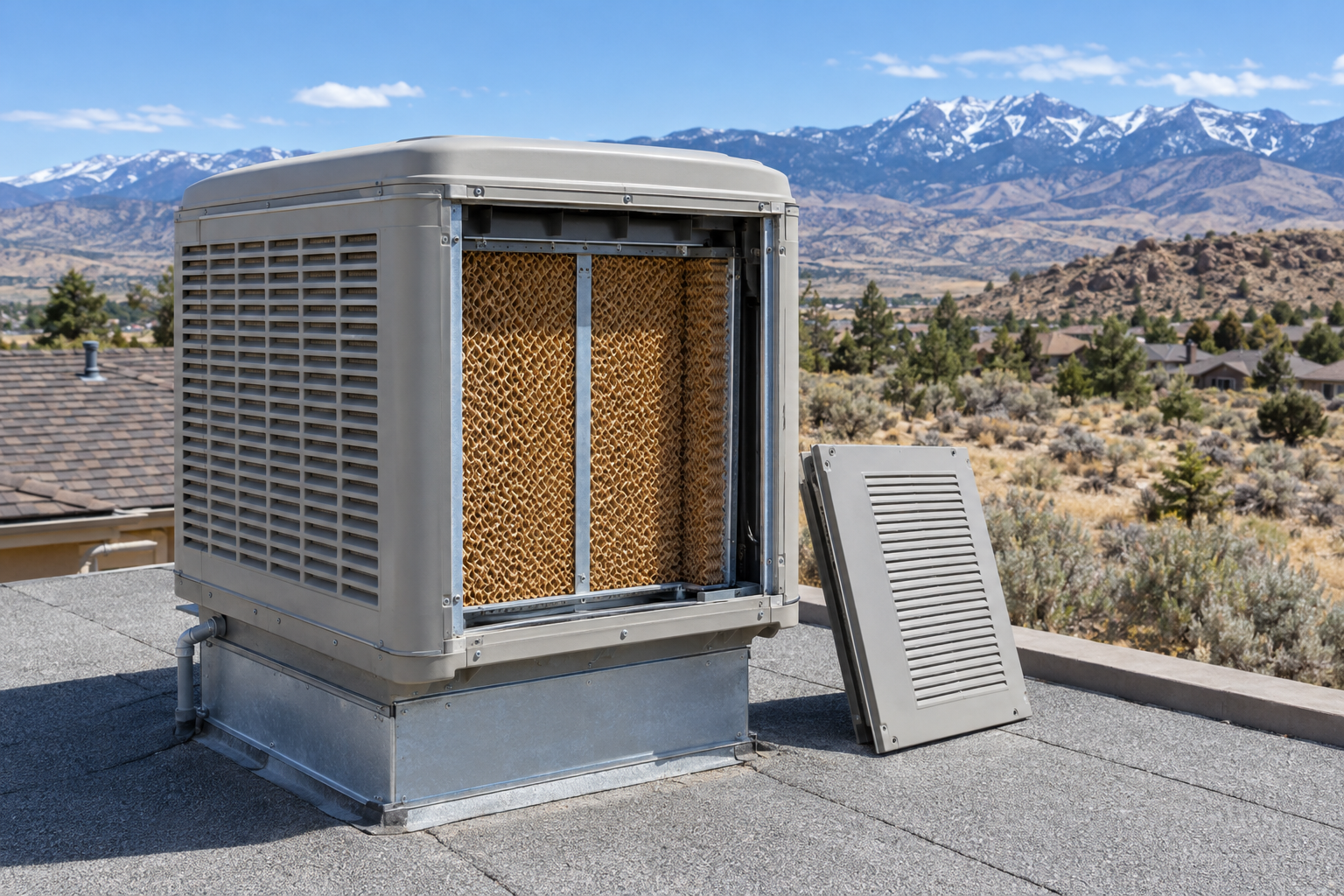
Illustrative image. Not a photo of a specific provider or job.
Evaporative (Swamp) Cooler Service: what to know
Evaporative coolers cool by moving air through wet pads, and they work well in Reno precisely because the air is dry. They use a fraction of the electricity of refrigerated AC. The trade-offs: cooling drops on the hottest afternoons, they add moisture to indoor air, and they demand seasonal attention most owners skip.
The two service moments that matter are spring start-up (pads, pump, belt, float and a flush of the pan) and fall winterizing (drain the pan and water line, disconnect and cover). Reno's hard freezes will crack a water line or pan that still holds water.
Signs this applies to you
- Weak or warm airflow even with the pump running
- A musty smell when the cooler runs, often old pads or a stale pan
- Mineral scale on pads, the float or the distribution lines
- Water dripping from the unit or the roof jack
- The belt squeals or the blower surges
- You are tired of seasonal chores and want to compare with refrigerated air
How the work usually goes
- Spring start-upPads inspected or replaced, the pan flushed, pump and float tested, belt tension set and the water line reconnected and checked for leaks.
- Mid-season carePads and the pan stay cleaner with a bleed-off or purge setting that limits mineral buildup, and a mid-summer pad check keeps airflow up.
- Fall winterizingWater supply off, line and pan drained completely, unit disconnected and covered. This is what protects the cooler and the water line through freezing nights.
- The conversion conversationIf you are weighing refrigerated air, ask for both scopes in writing: keep and maintain the cooler, or remove it and install a system, including duct sealing and electrical work.
In the Reno area
Hard water is a fact of life across the Truckee Meadows, and mineral scale is the number one killer of pads, floats and pumps here. Ask the provider about bleed-off settings or a purge pump sized for local water. If the cooler sits on the roof, ask how the roof jack and flashing will be checked for leaks at the same visit.
What affects the price
- Pad type and size: aspen pads are cheaper, rigid media lasts longer
- Roof access and the condition of the roof jack
- Whether the job is a start-up, a repair like a pump or motor, or a full unit replacement
- Conversion scope: duct sealing, electrical and drainage if switching to refrigerated air
Prices are set by the provider. Get a written quote.
Questions to ask any provider
- Are the pads due, and which media type do you recommend for our hard water?
- Will you check the roof jack and flashing while you are up there?
- How will the water line be drained and protected for winter?
- If we converted to refrigerated air, what would the full scope include?
Check licenses at the Nevada State Contractors Board license search.
Frequently asked questions
Sources and further reading
- U.S. DOE: Home cooling
- U.S. DOE Building America: evaporative condenser measure guide (PDF)
- Nevada State Contractors Board: license search
These pages give general background. This page does not give figures for your system or home, so confirm details with a licensed provider. General information only, not advice for your specific system. This site is an independent referral service. Providers are separate businesses responsible for their own licensing, insurance, pricing and work.