Furnace Repair in Reno, NV
What actually fails on a Reno furnace in January, how a safe diagnosis works and what to ask before approving a repair.
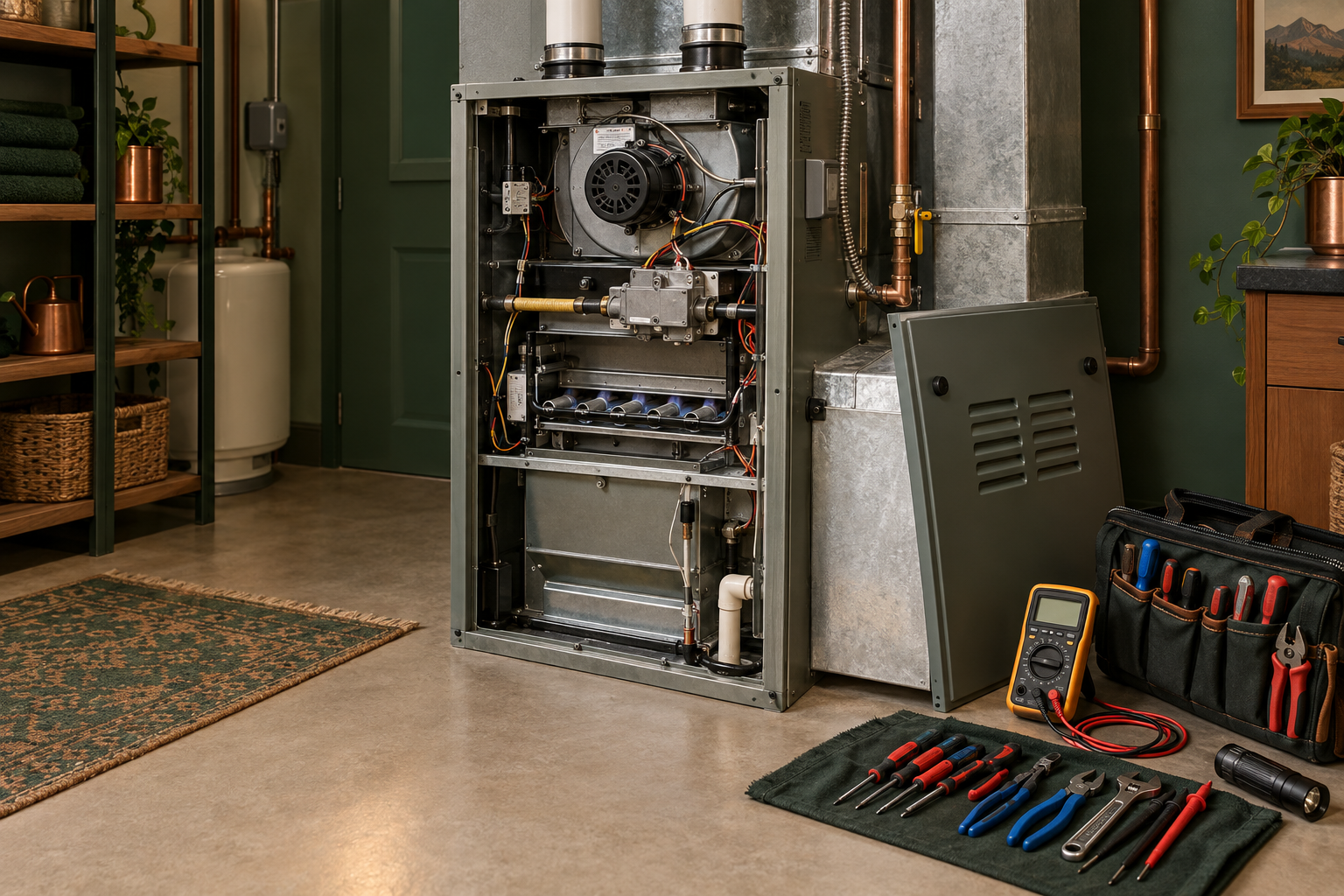
Illustrative image. Not a photo of a specific provider or job.
Furnace Repair and Diagnostics: what to know
Reno furnaces work hard from October through April, and most no-heat calls trace to a short list: ignition components, flame sensing, airflow limits and safety switches doing their job. The encouraging part is that several of the most common failures are small parts.
Because a furnace burns fuel, diagnosis is as much about safety as comfort. Venting, combustion and the heat exchanger get checked alongside the failed part, which is why 'it just needs a board' should still come with a combustion check on an older unit.
Safety first
If you smell gas or a carbon monoxide alarm sounds, leave the house and call 911 or the gas utility first. A yellow, wavering burner flame, soot around the furnace or flu symptoms that ease when you leave home also warrant shutting the system off and calling immediately.
Signs this applies to you
- The furnace blows cold air or never starts
- It starts, runs briefly, then shuts off and repeats
- The burner will not light, or lights with a delay and a bang
- Unusual smells beyond a few minutes of first-season burn-off
- New rattling, booming or squealing sounds
- The blower runs constantly or not at all
- Heating bills climbing with no thermostat change
How the work usually goes
- Quick checks firstThermostat mode and batteries, the furnace switch, breaker, filter condition and whether intake and exhaust vents are blocked by snow or debris.
- Read the faultModern furnaces flash diagnostic codes that point at the failed circuit: ignition, pressure switch, limit or blower.
- Test the part, then the systemThe suspect part is tested, not guessed, and after the repair the furnace's safety controls and combustion are verified.
- Written findingsYou get the failed part, the cause if it is known, the price and an honest read on the furnace's remaining life.
In the Reno area
Reno's elevation affects combustion: gas appliances installed or serviced here need altitude-appropriate setup, and manufacturers publish derating guidance for elevations above about 2,000 feet. If your furnace was installed by someone who skipped that step, ask the provider to verify the manifold pressure and orifices for altitude during the repair visit.
What affects the price
- The failed part: igniters and flame sensors at one end, blower motors and boards at the other
- Whether the failure caused secondary damage
- Age and warranty status of the furnace
- Access: attic and crawlspace furnaces take longer than garage units
Prices are set by the provider. Get a written quote.
Questions to ask any provider
- What did the diagnostic code and your tests show?
- Did you check the heat exchanger and combustion, or just the failed part?
- Is the furnace set up correctly for Reno's altitude?
- What warranty covers this repair, parts and labor?
Check licenses at the Nevada State Contractors Board license search.
Frequently asked questions
Sources and further reading
- U.S. DOE: Home heating
- U.S. Department of Energy: Guide to home heating and cooling (PDF)
- Rheem: high-altitude orifice and derating guidance (PDF)
- Nevada State Contractors Board: license search
These pages give general background. This page does not give figures for your system or home, so confirm details with a licensed provider. General information only, not advice for your specific system. This site is an independent referral service. Providers are separate businesses responsible for their own licensing, insurance, pricing and work.