Ductless Mini-Split Systems in Reno, NV
Where ductless mini-splits fit in Reno homes, how cold-climate models handle real winter nights, and what to settle before installation.
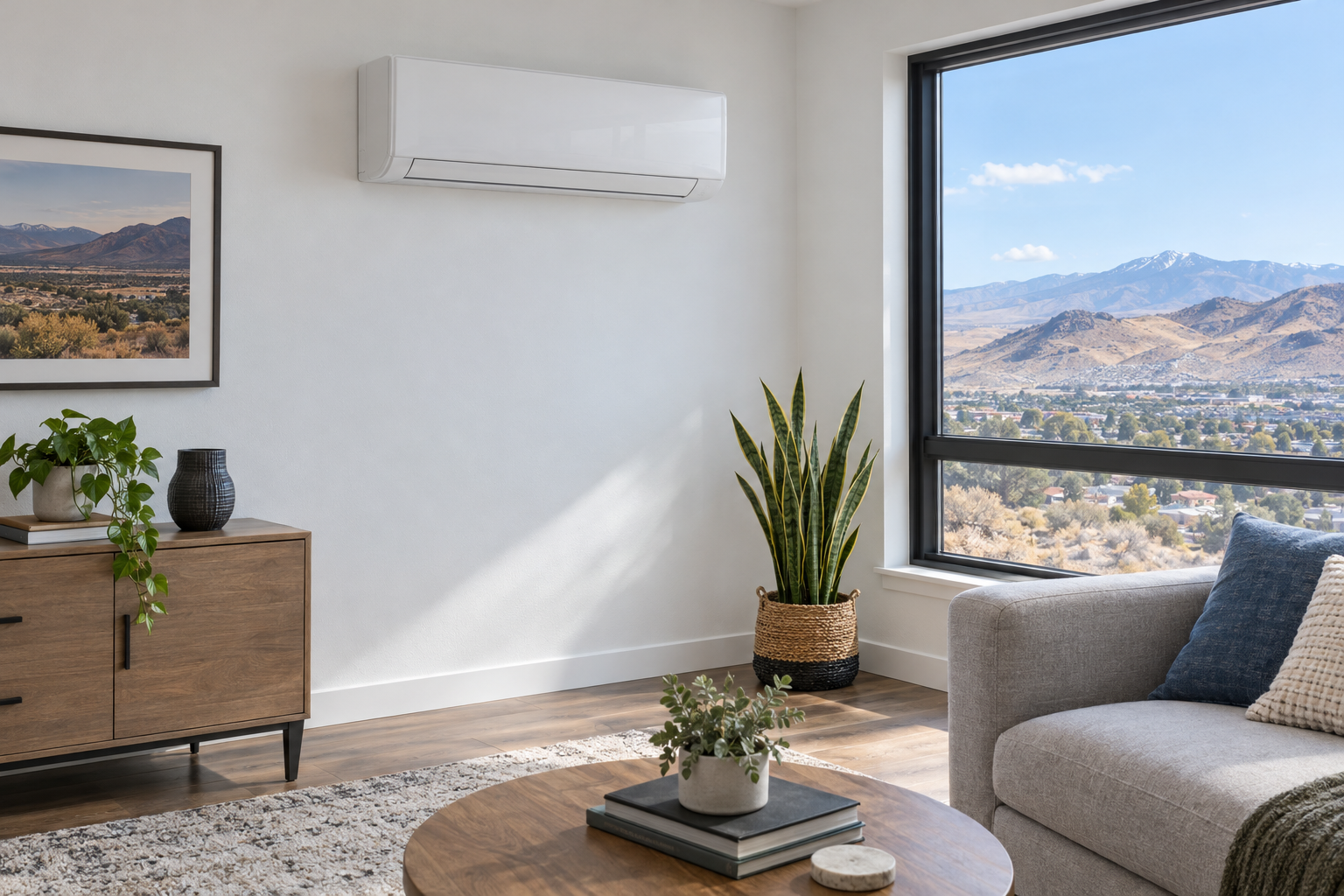
Illustrative image. Not a photo of a specific provider or job.
Ductless Mini-Split Systems: what to know
A ductless mini-split moves heat through refrigerant lines between an outdoor unit and one or more indoor heads, with no ducts required. That makes it a natural fit for Reno's older housing stock: 1940s Old Southwest bungalows, garage conversions, additions and rooms at the end of long duct runs that never stay comfortable.
Modern cold-climate models keep useful heating output well below freezing, which matters here. The details that decide satisfaction are sizing, head placement, condensate routing and how the outdoor unit is mounted to handle snow.
Signs this applies to you
- A room or addition that ducts never reached
- You want heating and cooling in one system for a specific space
- An older home where adding ductwork means opening walls
- Big temperature differences between rooms or floors
- You want to stop running a window unit or space heaters
How the work usually goes
- Room-by-room sizingEach indoor head is sized to its room's load, not the whole house at once. Oversized heads short-cycle and feel clammy in summer.
- Placement planningHeads go where air can circulate across the room, and the outdoor unit goes where snow shedding, service access and line-set routing all work.
- Line set, power and condensateRefrigerant lines, a dedicated circuit and a condensate path are run, ideally hidden in the wall or a cover matched to the siding.
- Start-up and readingsCharge and operation are verified by measurement, and you get a walkthrough of the remote, modes and filter cleaning.
In the Reno area
Ask how the outdoor unit will be mounted for snow: wall brackets or a raised stand keep it above drifting and clear of shoveling paths, and the unit needs clearance to defrost. For homes at higher elevations like Incline Village, confirm the model's rated heating capacity at low outdoor temperatures, not just its marketing label.
What affects the price
- Number of indoor heads and how far each is from the outdoor unit
- Cold-climate heating capability of the model chosen
- Electrical work for the dedicated circuit
- Line-set routing: surface covers cost less than opening and patching walls
Prices are set by the provider. Get a written quote.
Questions to ask any provider
- What heating capacity does this model keep at 5 degrees, and at minus 5?
- Where will the outdoor unit sit relative to snow drifting and defrost runoff?
- How will condensate drain, and can it freeze in winter?
- What warranty covers parts and labor, and who services this brand locally?
Check licenses at the Nevada State Contractors Board license search.
Frequently asked questions
Sources and further reading
- U.S. DOE: Heat pumps
- U.S. DOE: Types of air-to-air heat pumps (fact sheet, PDF)
- U.S. DOE: Proper sizing of HVAC systems
- Nevada State Contractors Board: license search
These pages give general background. This page does not give figures for your system or home, so confirm details with a licensed provider. General information only, not advice for your specific system. This site is an independent referral service. Providers are separate businesses responsible for their own licensing, insurance, pricing and work.