Furnace Replacement in Reno, NV
Replacing an existing furnace: sizing for a real winter, altitude setup and what a replacement quote should spell out. Calls from this page are for furnace replacement, not a first-time installation.
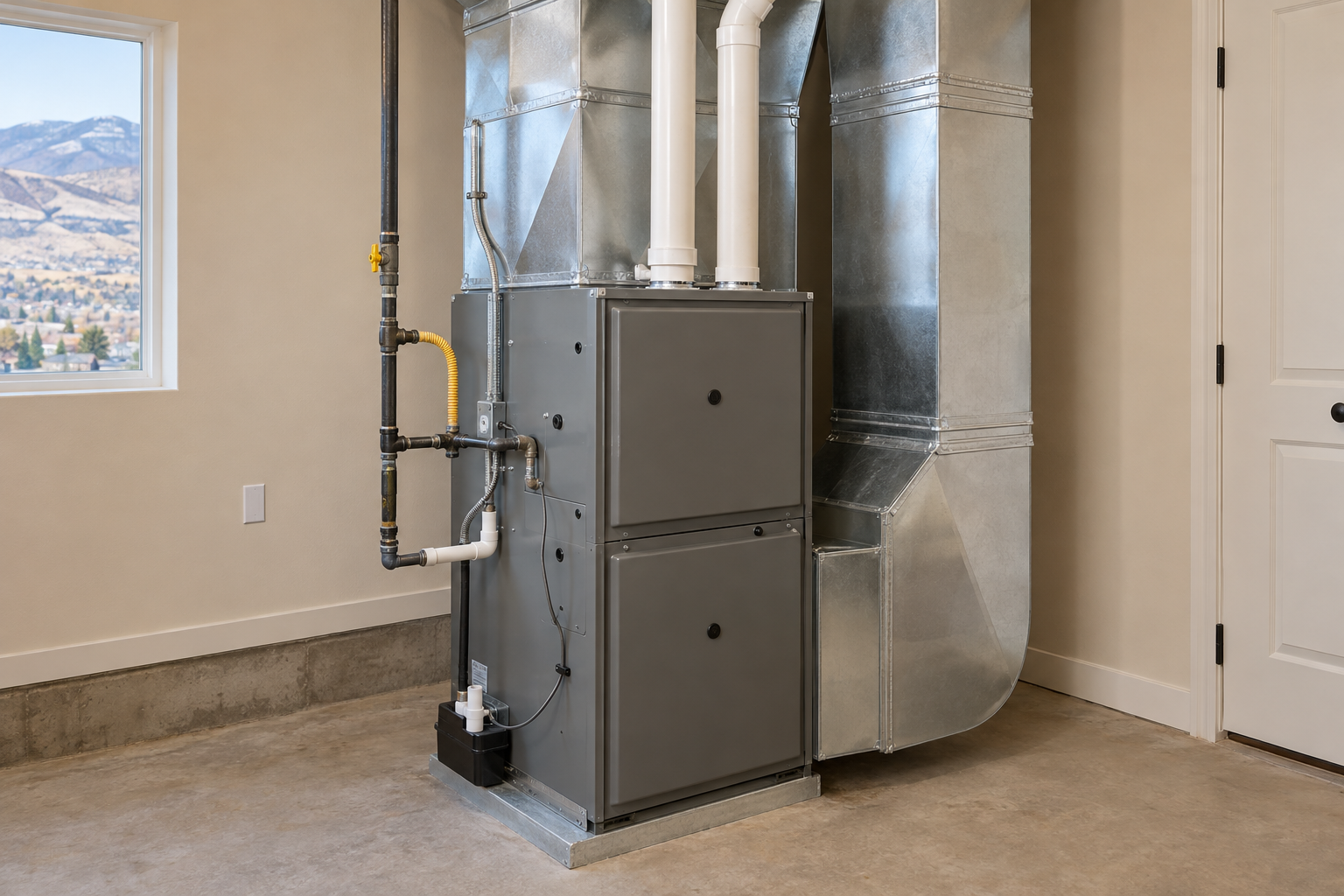
Illustrative image. Not a photo of a specific provider or job.
Furnace Replacement: what to know
A furnace replacement sets your comfort and gas bills for the next fifteen to twenty years. The decisions that matter are sizing, efficiency, venting and whether the installer sets the unit up for elevation. Reno sits above 4,400 feet, and manufacturers require high-altitude adjustment on gas furnaces, typically a derate and orifice or pressure changes above roughly 2,000 feet.
An oversized furnace is not a comfort upgrade. It heats the house in bursts, cycles hard, runs louder and wears out faster. Sizing should come from a load calculation, not the size of the old unit.
Signs this applies to you
- The current furnace is past 15 to 20 years or needs a major part
- A heat exchanger or control board quote approaches the price of new equipment
- Some rooms never get warm despite repairs
- The furnace is noisy, cycling constantly or driving gas bills up
- You are pairing a new AC or heat pump and the blower should match
How the work usually goes
- Load calculationThe home's heat loss is calculated from size, insulation, windows and climate, which sets the furnace capacity. Reno design temperatures are properly cold, so this number matters.
- Efficiency and venting choiceStandard-efficiency furnaces vent through metal flue; high-efficiency condensing models vent through PVC and produce condensate that must drain without freezing.
- Altitude setupThe installer adjusts the furnace for elevation per the manufacturer's instructions, then verifies manifold pressure and combustion with instruments.
- Permit, inspection, start-up readingsThe permit and inspection are handled, and you receive start-up readings: temperature rise, gas pressure and combustion numbers.
In the Reno area
Ask to see the altitude step in writing: the manufacturer instruction followed and the final manifold pressure measured. Permits for a furnace replacement go through the City of Reno, City of Sparks or Washoe County depending on the address, and the inspection is what verifies venting and gas piping were done right. For condensing furnaces, ask how the condensate line is protected from freezing in garage or crawlspace installs.
What affects the price
- Capacity and efficiency rating of the furnace
- Venting changes, especially converting to a condensing model with PVC venting and condensate drainage
- Gas line, electrical or duct modifications to fit the new unit
- Permit and inspection fees, and altitude conversion parts
Prices are set by the provider. Get a written quote.
Questions to ask any provider
- What capacity did the load calculation call for, and why this model?
- How will the furnace be adjusted for Reno's elevation, and will you measure the result?
- Who pulls the permit, and is the inspection included?
- What warranties cover the heat exchanger, other parts and your labor?
Check licenses at the Nevada State Contractors Board license search.
Frequently asked questions
Sources and further reading
- U.S. DOE: Home heating
- U.S. DOE: Quality HVAC installation
- Rheem: high-altitude orifice and derating guidance (PDF)
- City of Reno: building permits
- Washoe County: what requires a permit
- Nevada State Contractors Board: license search
These pages give general background. This page does not give figures for your system or home, so confirm details with a licensed provider. General information only, not advice for your specific system. This site is an independent referral service. Providers are separate businesses responsible for their own licensing, insurance, pricing and work.