HVAC Tune-Ups in Reno, NV
Reno's two-season rhythm means two tune-ups a year. What each visit should actually cover and what you can do yourself between them.
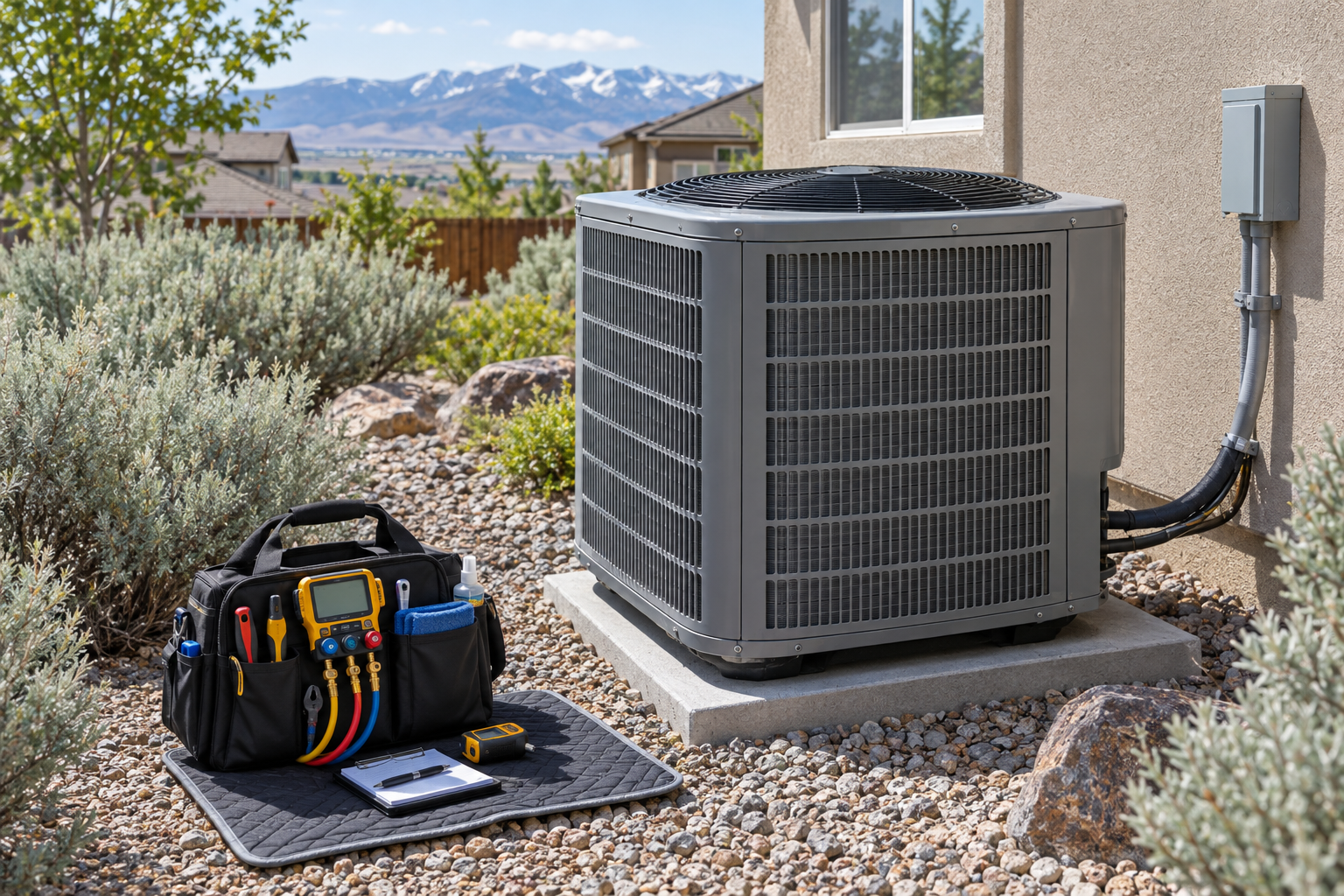
Illustrative image. Not a photo of a specific provider or job.
AC and Furnace Tune-Ups: what to know
Reno asks for both seasons' worth of maintenance: the AC needs a spring check before June heat and the furnace a fall check before the first hard freeze. Each visit has its own list, and a real tune-up is measured in readings, not a glance and a sticker.
The most valuable maintenance is also the cheapest: filters changed on schedule, the outdoor coil kept clear of dust and cottonwood, and vents and registers unblocked. A tune-up adds the measurements you cannot do yourself.
Signs this applies to you
- The system has not been serviced in over a year
- Cooling or heating has gradually gotten weaker
- Bills creeping up with no change in use
- Dust puffs from registers when the blower starts
- The outdoor coil looks matted with dust or cottonwood
- You want the warranty's maintenance requirement documented
How the work usually goes
- Spring cooling visitCoil condition and cleaning, refrigerant readings, electrical components tested, condensate drain flushed, blower and airflow checked, thermostat verified.
- Fall heating visitBurners and ignition checked, flame sensor cleaned, safety controls tested, combustion and venting verified, blower and temperature rise measured.
- Readings on paperYou should get the numbers: temperature split, pressures, gas pressure or combustion results, not just a checkmark list.
- A plain-English summaryWhat is fine, what is wearing and what to budget for, so October never surprises you with a dead furnace.
In the Reno area
Time the visits to the local calendar: cooling in April or May before the first heat wave, heating in September or October before nights drop below freezing. After wildfire smoke events, check the filter and outdoor coil again even mid-season, because smoke loads filters fast. Ask the provider to note the coil's condition, since wind-driven dust here can undo a cleaning in one storm.
What affects the price
- One visit versus a two-visit seasonal plan
- Coil condition: a matted coil adds cleaning time
- Whether parts like capacitors are tested only or replaced preventively
- System count: homes with a furnace plus a separate evaporative cooler need both covered
Prices are set by the provider. Get a written quote.
Questions to ask any provider
- What readings will you record, and do I get a copy?
- Does the visit include coil cleaning or is that separate?
- What did you find that I should budget for in the next year or two?
- Does this satisfy my equipment warranty's maintenance requirement?
Check licenses at the Nevada State Contractors Board license search.
Frequently asked questions
Sources and further reading
- U.S. DOE: Guide to home heating and cooling (maintenance, PDF)
- U.S. Department of Energy: Guide to home heating and cooling (PDF)
- U.S. EPA: Wildfires and indoor air quality
- Nevada State Contractors Board: license search
These pages give general background. This page does not give figures for your system or home, so confirm details with a licensed provider. General information only, not advice for your specific system. This site is an independent referral service. Providers are separate businesses responsible for their own licensing, insurance, pricing and work.