Emergency HVAC Service in Reno, NV
Which heating and cooling failures are genuinely urgent in Reno's winters and summers, quick checks to run first, and the signs that mean call 911, not an HVAC company.
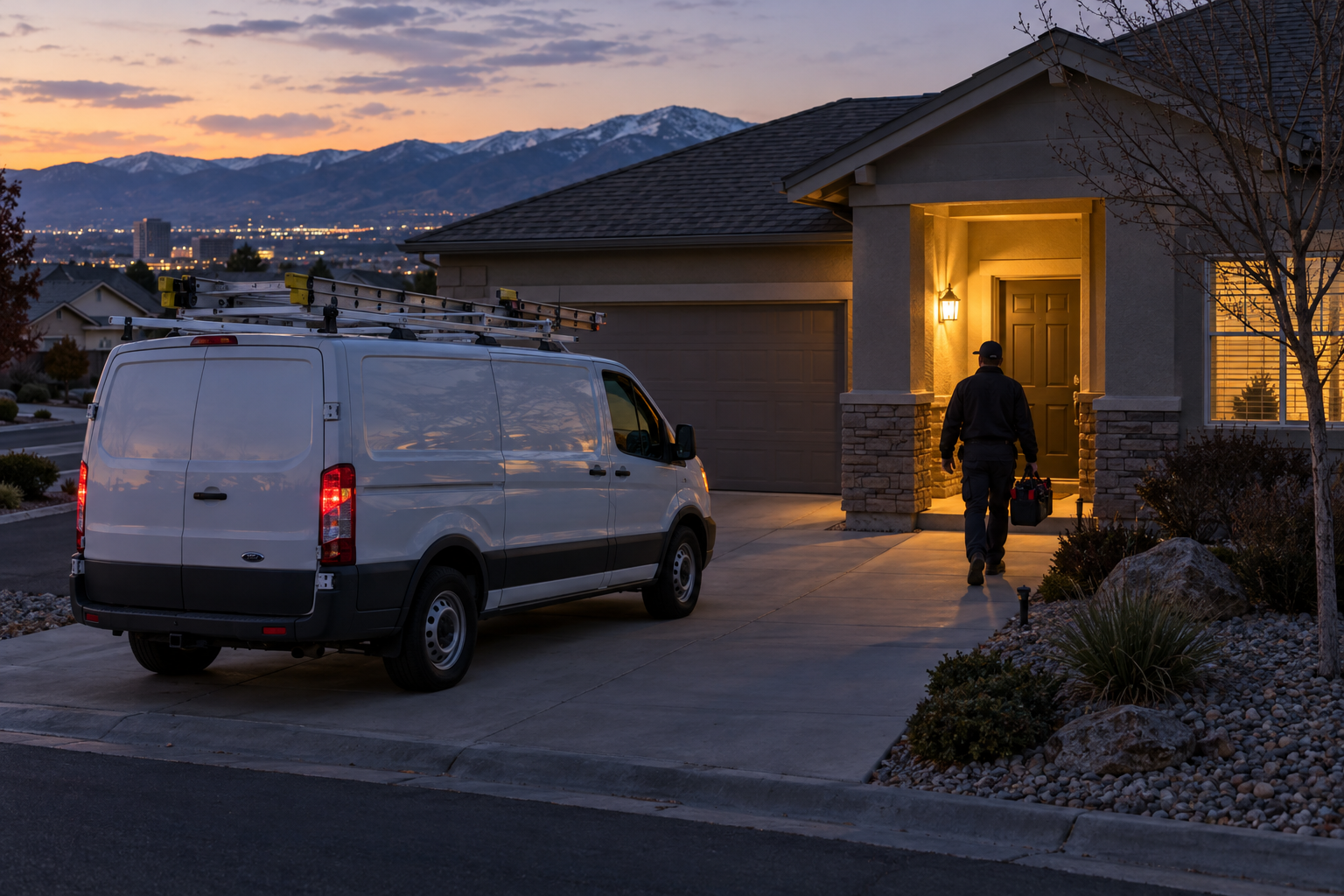
Illustrative image. Not a photo of a specific provider or job.
Emergency HVAC Service: what to know
In Reno, urgency runs in both directions. A furnace that quits on a January night with lows in the teens can freeze plumbing and make a house unlivable, and an AC failure during a 100-degree spell is a health risk for infants, older adults and anyone with medical needs.
Before you call, two minutes of checks can save a trip: thermostat mode and batteries, the breaker and the furnace switch, the filter, and whether the outdoor unit is blocked by snow, leaves or windblown debris.
Safety first
If you smell gas, your carbon monoxide alarm sounds, or you see smoke or scorch marks on the equipment, leave the house and call 911 or the gas utility's emergency line before calling any HVAC provider. Do not run the system.
Signs this applies to you
- No heat at all when overnight lows are near or below freezing
- A burning smell that persists beyond the first few minutes of a new heating season
- The CO alarm sounds or anyone in the home feels dizzy or nauseous near a running furnace
- No cooling during extreme heat with a vulnerable person in the home
- Loud banging, screeching or the smell of hot electrical wiring
- Water leaking from the indoor unit onto ceilings or walls
How the work usually goes
- Run the quick checksThermostat set to heat or cool with fresh batteries, breaker and service switch on, filter not completely clogged, outdoor unit clear of snow or debris.
- Call and describe the failureSay what happened, what you already checked and whether anyone vulnerable is in the home. That changes how the call is prioritized.
- Ask about availability and pricingAfter-hours and weekend visits are priced differently by each provider. Ask for the dispatch or diagnostic fee before you agree to the visit.
- Get the findings in writingEven on an emergency call, ask what failed, what the repair costs and whether a temporary fix can hold until a full repair.
In the Reno area
Reno's hard freezes make a dead furnace a same-night problem: a house without heat in the teens can freeze supply lines within hours, especially in older homes in the Old Southwest and Northwest Reno. Open cabinet doors under sinks on exterior walls and let faucets drip while you wait for help.
What affects the price
- After-hours, weekend or holiday timing, which each provider prices differently
- Whether the fix is a part swap or a temporary measure to get through the night
- Parts availability for older equipment
- Whether the visit leads to a larger repair or replacement decision
Prices are set by the provider. Get a written quote.
Questions to ask any provider
- What is the after-hours dispatch or diagnostic fee?
- Can a temporary repair hold safely until a full fix?
- What exactly failed, and is the rest of the system in similar shape?
- Is the failed part covered by any existing warranty?
Check licenses at the Nevada State Contractors Board license search.
Frequently asked questions
Sources and further reading
- U.S. Department of Energy: Guide to home heating and cooling (PDF)
- U.S. DOE: Home heating
- Nevada State Contractors Board: license search
These pages give general background. This page does not give figures for your system or home, so confirm details with a licensed provider. General information only, not advice for your specific system. This site is an independent referral service. Providers are separate businesses responsible for their own licensing, insurance, pricing and work.