Heat Pump Services in Reno, NV
One box that heats and cools. How modern cold-climate heat pumps handle Reno winters, when dual fuel makes sense and what to ask.
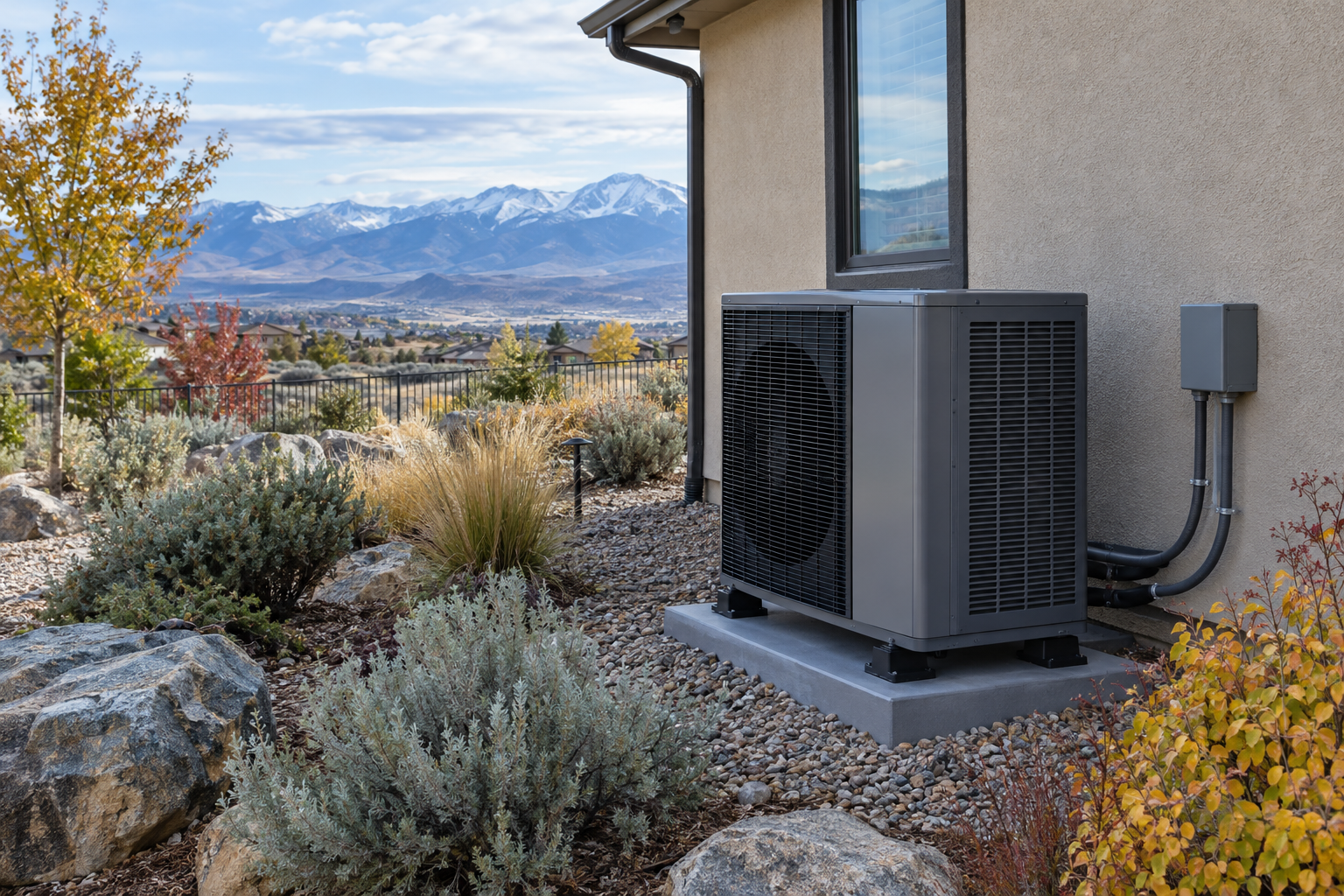
Illustrative image. Not a photo of a specific provider or job.
Heat Pump Services: what to know
A heat pump is an air conditioner that runs both directions, moving heat out of the house in summer and into it in winter. Because it moves heat instead of making it, a heat pump delivers more heat energy than the electricity it consumes, which is why it keeps showing up in Reno replacement conversations.
The honest Reno question is winter capacity. Older heat pumps faded below freezing. Current cold-climate models hold most of their output well below zero, but model choice, sizing and a backup plan for the coldest nights still decide whether the house stays warm through a Sierra cold snap.
Signs this applies to you
- You want one system for heating and cooling
- Your furnace and AC are both nearing replacement age
- You want to cut gas use or your home has no gas service
- Summer cooling is fine but you want quieter, steadier heating
- You are comparing a heat pump against a furnace plus AC
How the work usually goes
- Cold-climate model selectionCompare models by their capacity tables at 5 degrees and below, not by the nameplate rating, which is measured in mild weather.
- Sizing and backup strategyThe load calculation sets capacity, and you decide on backup: built-in electric strips or a dual-fuel pairing with a gas furnace for the coldest nights.
- Placement for snow and defrostThe outdoor unit needs elevation above snow drift, clearance for defrost melt and a spot where defrost steam will not ice up a walkway.
- Verified start-upCharge, airflow, defrost operation and auxiliary heat staging are all checked and documented.
In the Reno area
Reno's winter design temperature sits low enough that model selection is everything: ask for the capacity table at 5 degrees and compare it against the home's calculated heat loss. Dual fuel, where a gas furnace takes over on the coldest nights, is a popular local answer because it keeps gas as the backup instead of expensive electric resistance strips.
What affects the price
- Cold-climate capability: models that hold capacity in the cold cost more
- Whether existing ducts, electrical service and the air handler can be reused
- Backup heat strategy: integrated strips versus a dual-fuel furnace pairing
- Permits and any electrical panel work the new circuit requires
Prices are set by the provider. Get a written quote.
Questions to ask any provider
- What capacity does this model deliver at 5 degrees, and what is my home's calculated heat loss?
- What is the backup plan for the coldest nights, and what does it cost to run?
- Where will the outdoor unit sit relative to snow and defrost drainage?
- Are there current utility or federal incentives this equipment qualifies for?
Check licenses at the Nevada State Contractors Board license search.
Frequently asked questions
Sources and further reading
- U.S. DOE: Heat pumps
- U.S. DOE: Types of air-to-air heat pumps (fact sheet, PDF)
- U.S. DOE: Proper sizing of HVAC systems
- Nevada State Contractors Board: license search
These pages give general background. This page does not give figures for your system or home, so confirm details with a licensed provider. General information only, not advice for your specific system. This site is an independent referral service. Providers are separate businesses responsible for their own licensing, insurance, pricing and work.