Refrigerant Leak Repair in Reno, NV
A system low on refrigerant has a leak. How leaks are found, what a real repair involves and why a seasonal 'top off' costs you twice.
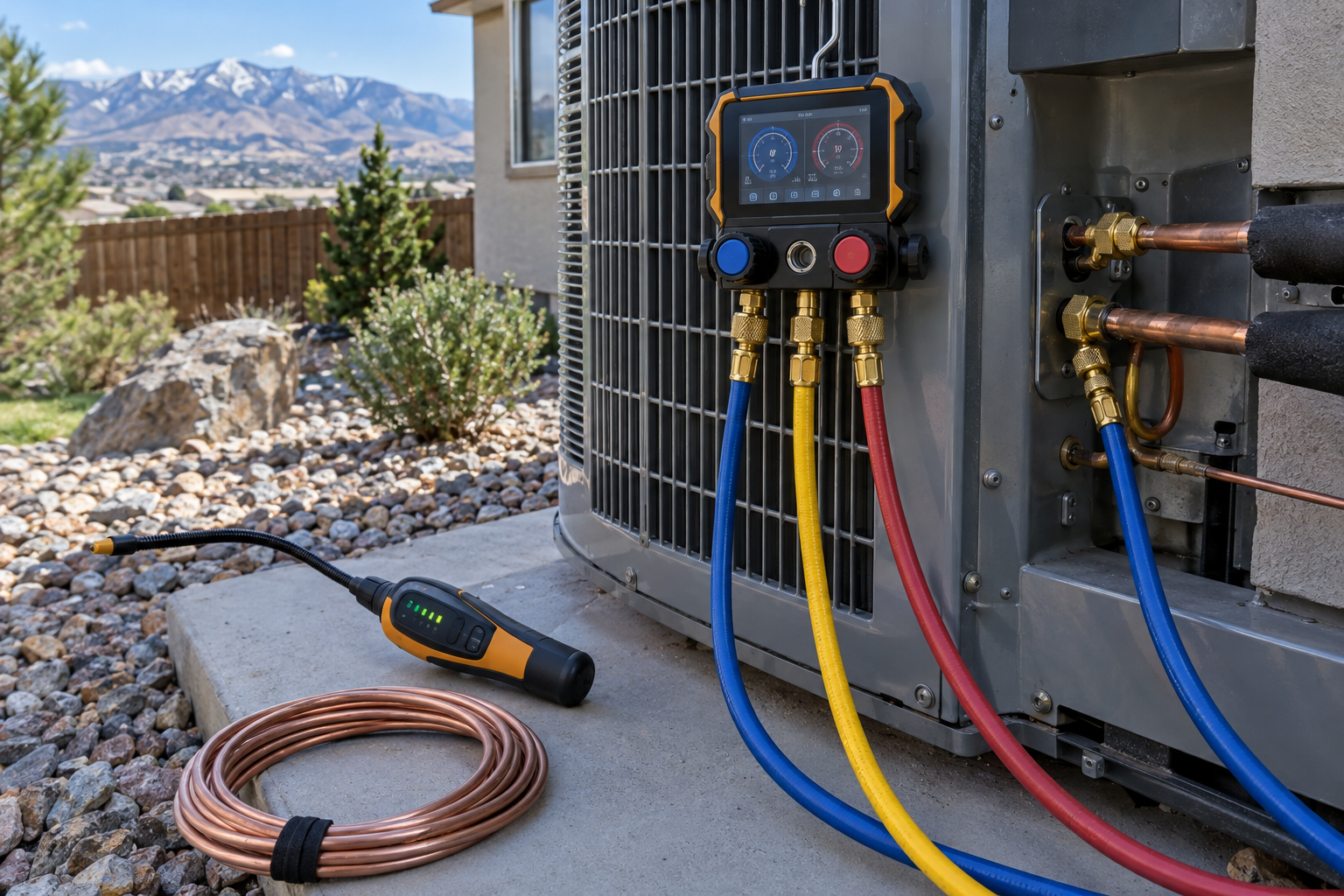
Illustrative image. Not a photo of a specific provider or job.
Refrigerant Leak Detection and Recharge: what to know
Refrigerant circulates in a sealed loop and is never consumed. If a system is low, the refrigerant went somewhere, and adding more without finding the leak means paying for the same refrigerant again next season while the leak grows.
Leaks concentrate in predictable places: the indoor coil, flare and braze joints, the service valves and the outdoor coil, where vibration and corrosion work year after year. Reno's wind-driven dust accelerates coil corrosion on exposed units.
Signs this applies to you
- Cooling that faded gradually over weeks or seasons
- Ice on the refrigerant lines or the indoor coil
- A hissing or bubbling sound near a unit or line set
- The system runs constantly but never reaches the set temperature
- An oily residue on fittings or the coil
- A provider suggests a recharge without mentioning a leak search
How the work usually goes
- Confirm the charge is lowPressures and temperatures are measured and compared with the manufacturer's targets, since dirty coils and airflow problems mimic low charge.
- Find the leakElectronic detectors, dye or nitrogen pressure tests locate the point. The location decides whether repair or part replacement makes sense.
- Repair, then verifyThe leak is fixed or the leaking component replaced, the system is evacuated and recharged by weight, and the charge is verified by measurement.
- Document itYou should know where the leak was, what was done and what refrigerant and quantity went in, especially for older refrigerants with rising costs.
In the Reno area
Ask what refrigerant the system uses before approving anything. R-22 was phased out of production and now costs enough that a recharge on an older Reno system often belongs in a replacement conversation instead. Newer refrigerants are cheaper but still priced by the pound, so a leak repair beats an annual refill.
What affects the price
- Where the leak is: a fitting repair versus an indoor coil replacement
- Refrigerant type and the pounds needed after the repair
- Whether the leaking component is under a parts warranty
- Access to the coil, especially attic air handlers and rooftop units
Prices are set by the provider. Get a written quote.
Questions to ask any provider
- Where exactly is the leak, and how did you find it?
- What refrigerant does this system use, and what does it cost per pound?
- Is a recharge being proposed without a leak repair, and why?
- What warranty covers the leak repair?
Check licenses at the Nevada State Contractors Board license search.
Frequently asked questions
Sources and further reading
- U.S. EPA: Section 608 technician certification
- U.S. DOE: Home cooling
- Nevada State Contractors Board: license search
These pages give general background. This page does not give figures for your system or home, so confirm details with a licensed provider. General information only, not advice for your specific system. This site is an independent referral service. Providers are separate businesses responsible for their own licensing, insurance, pricing and work.